

Try This At Home
Getty Images / the Atlantic
—
Welcome to the Weekend Gene Pool, where I seek your input in return for entertainment. (You may regret this one if you are neurotic enough to participate in it.)
A quarter century ago I wrote a quasi-medical, largely irresponsible humor book titled “The Hypochondriac’s Guide to Life. And Death.” The subtitle was “Caution: Hiccups Can Mean Cancer.” It was exactly that kind of book, dedicated to making you crazy with fear over your own body. It was all true — researching it gave me the skills of a mediocre internist — but it was wildly alarmist.
On every few pages of the book, I published a “self-test” for the reader to take. Each test was accompanied by this delightful illustration by the great Bob Staake:
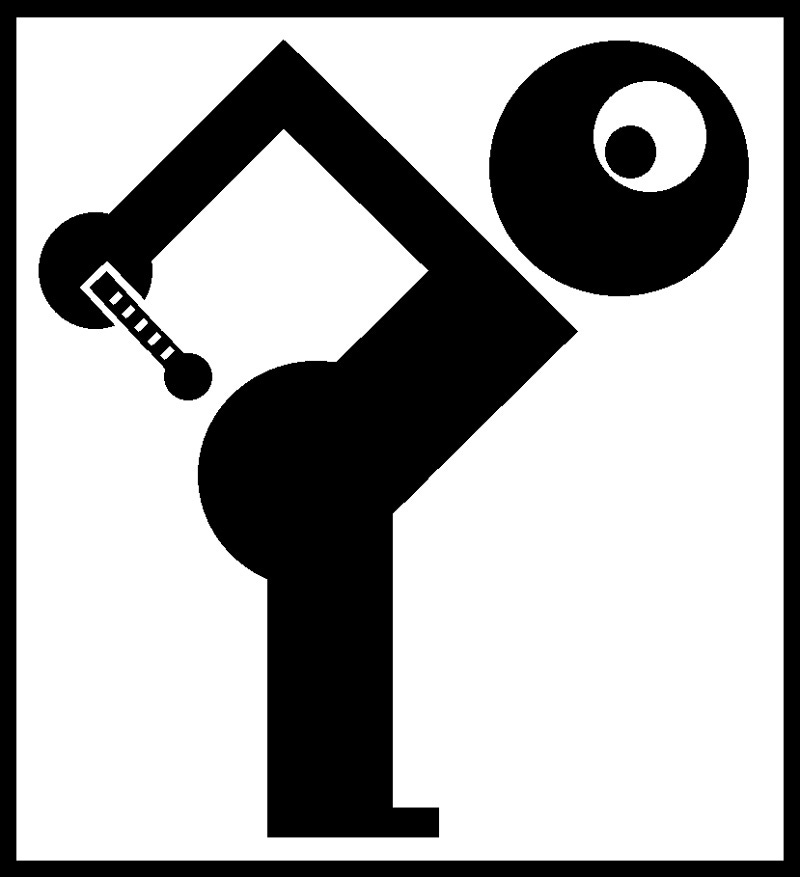
These were simple, legitimate at-home procedures you could perform to help diagnose whether you might have any number of dire conditions. I’m going to print ten of them today, and ask you to try as many as you dare, and report the results back here! Okay? Great!
(They get increasingly complicated.)
Quick! Go to a mirror. Check out your earlobe. Is it creased? There is a correlation between people with a crease going at least halfway across their earlobe and people who have, or are likely to develop, coronary artery disease. (Surviving statuary of the Roman Emperor Hadrian show such a crease, and he died of heart disease.)
Reach into your pocket or purse. Feel for a quarter. Don’t take it out, just explore its surfaces with your fingertips. Can you tell the heads from the tails? Failure to do so can signal an incipient brain tumor or uncoming stroke.
With your palm facing you, tap lightly on the center of your wrist. Do you feel a radiating numbness in your hand? This might mean early carpal tunnel syndrome.
Insert the tips of your three middle fingers into your mouth, making a vertical stack, without any finger touching your lips or teeth. If you cannot open that wide, you might have temporomandibular joint syndrome.
Take a deep breath, and then start counting rapidly out loud. If your lungs are functioning properly, you should be able to count to 70 or so before you need to take a breath. If you don’t get near that, your lungs may be showing diminished volume, which could indicate restrictive lung disease, ranging from pneumonia to lung cancer to kyphoscoliosis, a malformation of the spine sometimes associated with heart disease.
Stand up. Hold both arms straight above your head, with the sides of your arms touching your ears. Remain in that position for three minutes. If you feel stuffiness or nasal congestion or dizziness, this is called Pemberton’s Sign, and it can mean you have thyroid disease or obstruction in the large veins leading to the heart, which is bad.
Get two pins and a ruler with millimeter markings. Touch the skin in varying parts of the body with the two pins held at various distances apart to see how close the points must be before you feel it as one pinprick and not two. Different parts of the body should have different degrees of sensitivity and, no, the fingertips are merely the second most sensitive organ. The first are the lips and tongue, a rather nice piece of work by the Almighty, who is highly invested in the perpetuation of the species. Lips and tongue should be able to be able to discriminate between points that are one millimeter apart. Next, the fingertips, two to 8 millimeters apart. The palm of the hand, 8-12. The back, 40-70. In these normal ranges, if you continue to feel the pricks as a single prick, you might have peripheral neuropathy. Or Lyme disease. Or diabetes, or MS, or poisoning by arsenic or cyanide.
Lie on your back. Take the heel of one foot and place it on the opposite knee. Run the heel down the center of the leg, staying on the shinbone. This is called the Heel-Shin Test, and it is a surprisingly sensitive way to detect early disease of the cerebellum, the portion of the brain that controls equilibrium and voluntary muscular activity. Your heel should be able to stay to the middle of the leg without deviating to the sides or having hesitant, herky-jerky motion. Cerebellar failure may eventually result in an unsteady gait and even inability to walk. It can also signal the onset of Creutzfeldt-Jakob disease, which is always fatal.
Take your pulse, at the wrist, counting the beats for 15 seconds. Then listen to your heartbeat for the same length of time. Then do it again, and again. If your pulse is consistently lower than your heartbeat, this is a condition known as “pulse deficit,” and it might indicate a heart arrhythmia, or AFib. To be significant, a pulse deficit would have to be constant. You would have to test yourself again and again and again, day and night. You’re probably fine. Check it again, why don’t you?
Take the middle finger of both hands and extend them, as though you were making a rude gesture toward this book. (You can stop now.). Now place the two fingers together, parallel, back to back, knuckle touching knuckle, nail touching nail, with your right hand to the left of your left hand. (You will have to cross your forearms to do this.) Inspect the area between the nail beds. There should be a small space between them, roughly the shape of an elongated diamond, or a rhombus, maybe two millimeters wide at the widest point. Got it? No? You might have “clubbing,” an abnormal enlagement of the fingertips, which can indicate any number of cardiopulmonary diseases, including bronchiectasis or endocarditis, or even lung cancer. This test is called the Schamroth Procedure. A positive result, however, might actually mean nothing is wrong with your heart! You might just have liver disease, or esophogeal cancer.
See, wasn’t that invigorating? Please report your results, or just your thoughts and experiences on this general subject. Funny is good. Dire is also good. Do it here:
—
If you upgrade your subscription to “paid,” I officially diagnose that you will live a long, healthy, rewarding life. If you do not so upgrade, I shall not discuss your prognosis at this time. Everything will probably be fine.
As Karen Bock-Losee noted below, Dr, Google can amplify your hypochondria far more than sticking your fingers in various orifices can. My wife once Googled the recurring rash on our 17-year-old son's soles and ankles and came to the conclusion that he had Trench Foot. I immediately gave him a shot of gin, told him to stop lollygagging, and sent him to get back to the front line.
Frankly, Dr. Google has made your book obsolete. I currently have dozens of potential forms of cancer and heart disease as well as scurvy and athlete’s foot.