

The Integrity Liquidator
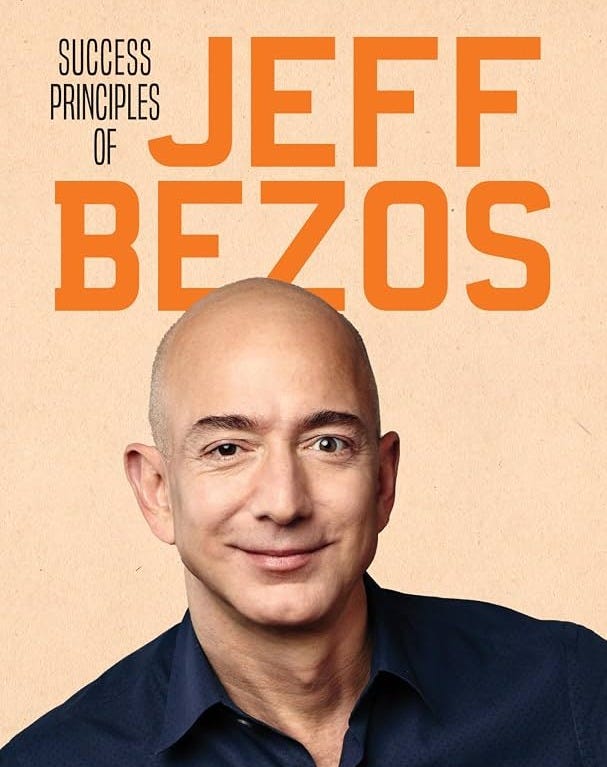
Until a couple of days ago, I’d thought I understood Jeffrey Bezos’s shameful financial abandonment of the Washington Post. I had actually worried about it years before, in the heady days after Bezos first bought the paper in 2013. My fear, I wrote, was that the Amazon founder would financially undergird the paper, tinker with its business model to try to make it profitable, fail at this daunting task, and get bored. Then — lacking a lifelong regard for the vital mission of journalism — he’d sell the place like just another business asset to some vulture capitalist for routine dismantling, and move on to his next super-ambitious venture. That was a bad scenario.
What actually happened, it turns out, was even worse. It had a similar effect, but I had the motivations wrong. They were less defensible — more evil, driven by pure self-interest and cringing opportunism. Groveling ambition. Perfidious obsequiousness. Pharisaical sycophancy. Undiluted mammonism. Editorial apostasy. From the standpoint of subordinating one’s principles to one’s greed, the whole thing was fecal.
I learned this from a fine, restrained story in The Wall Street Journal, written in part by Josh Dawsey, one of the phalanx of superior journalists who leapt from the Post to less noxious venues when Bezos’s betrayal of the newspaper became manifest. The headline is “How Bezos Learned to Love Trump.”
The article is long and complicated, but I will distill it for you here into a few short paragraphs, based on the story and a few inferences I have made from it.
Jeffrey Bezos began as a Trump detractor. When Trump was first elected, and as the new steward and would-be savior of a great newspaper, Bezos initially saw part of his mission to be to help battle this blatant existential threat to the country.
Bezos disrespected Trump and Trump disliked Bezos, quite openly. (“I hate this son of a bitch Jeff Bezos and I hate The Washington Post,” the new president told an aide. He also called Bezos “Bozo.”) Bezos criticized NBC and other news media for not doing more to point out Trump’s deficiencies.
Trump’s first administration ghosted Bezos.
Things changed, dramatically, after Trump appeared likely to win a second term. For one thing, Bezos’s needs as a mega-billionaire had changed. His primary source of future income was now his space company — Blue Origin — and the new president had the ability to financially help or financially hinder that project, and had a famously vindictive state of mind. Second, Bezos’s prime competitor in the commercial space race was his arch enemy, Elon Musk, owner of SpaceX, and Musk was best buds with the president.
Now Bezos was in a bind.
To complicate matters, something intriguing was happening: Musk and Trump had a pretty spectacular public falling-out.
With the Washington Post, Bezos was facing a choice, financially — sell the money-hemorrhaging paper to someone of integrity, someone who understood the vital civic duty of a newspaper, someone like MacKenzie Scott, his ex-wife — or keep it as grease to court Trump.
Boy, did he trowel on the grease.
First, he personally killed The Post’s plan to endorse Kamala Harris, an unprecedented bigfoot meddling in editorial policy by a Post owner. Then, Amazon donated $1 million to Trump’s inaugural fund, and an undisclosed amount to help pay for Trump’s ballroom. It also invested $40 million to license a dreadful documentary about Melania Trump.
But Bezos was just beginning his servility tour. He destroyed the Opinions section, issuing an edict that all content within would reflect two positions only: personal liberties and a free-market economy. Businessmen love that, and so do right-wing politicians like Trump, who seem to interpret “personal liberties” as the right to be politically incorrect. The duty not to be “woke.”
Bezos replaced long-time left-centrist opinion writers with younger, fiercely libertarian ideologues. Indeed, they write largely to advocate personal freedoms and hands-off business by government.
In the end, Bezos just gutted the Washington Post staff, firing nearly half of its full-time employees. The effects have been obvious. That the newspaper still sometimes breaks big investigative stories is a tribute to a remarkably driven, capable skeleton staff. Bezos did what he could to prevent that.
Trump loved all this and began shoveling vast sums in contracts to Amazon and Blue Origin.
Bezos’s sycophancy knew no bounds. When Trump, at a lectern, told jokes that flopped, Bezos was the only one in the audience laughing uproariously.
In speaking to The Wall Street Journal, Bezos’s supporters soldiered on in his defense. “You tell me what you would have done in October, November, December 2024 when your largest competitor was the main backer of the next president of the United States,” said Bezos confidant Barry Diller.
It’s a fair question. One answer would be to value integrity over greed and at least mitigate his revolting withering of character and his capitulation to power. The man is worth $250 billion. He can treat himself to a $500 million yacht and a $50 million Italian wedding to a second wife with a Mar-a-Lago face and figure. He can afford to sometimes stand on principle, no? That would be my answer. But that’s just me.
—
Today’s Gene Pool Gene Poll:
Good. If you DO have a clear question, tell it to us here:
—
Okay, this is just for fun. A reader named Sean Clinchy sent me this video. It goes on for a few minutes. I have cut it off after the first 20 seconds or so, because that is all you really need. The rest is amusing but repetitive. Watch the whole thing if you wish.
—
(And no, it’s not really an old recording.)
—
And finally, on another note altogether, a completely different one: I recommend that you try to find the time to listen to an 8-minute video. It’s quite the opposite of the smart-ass, combative, depressing tone of the rest of this column.
Christine Lavin, my friend the folksinger, sent it to me after she read my column about Betty Lou Oliver, who survived an 80-story free fall in an elevator in the Empire State Building in 1945. This is a song Christine wrote and recorded in 2017, as a tribute to that building, and to life. It is beautiful. I found myself tearing up over a song about a building.
I’m publishing this here with Christine’s permission.
Grandpa and the Empire State Building
—
That’s it for today, except for my tedious plea. This is, believe it or not, my current livelihood.
Silly me. I had thought one of the great advantages to making $250 billion is that you don't have to suck up to anyone, anymore, anywhere, anytime for anything. Jeffie-poo has taught me differently.
Jeff, how do you walk without a spine?