

Snow Big Thing
Hello. Welcome to the Weekend Gene Pool, where you and I, together, explore the mysteries and ironies of life.
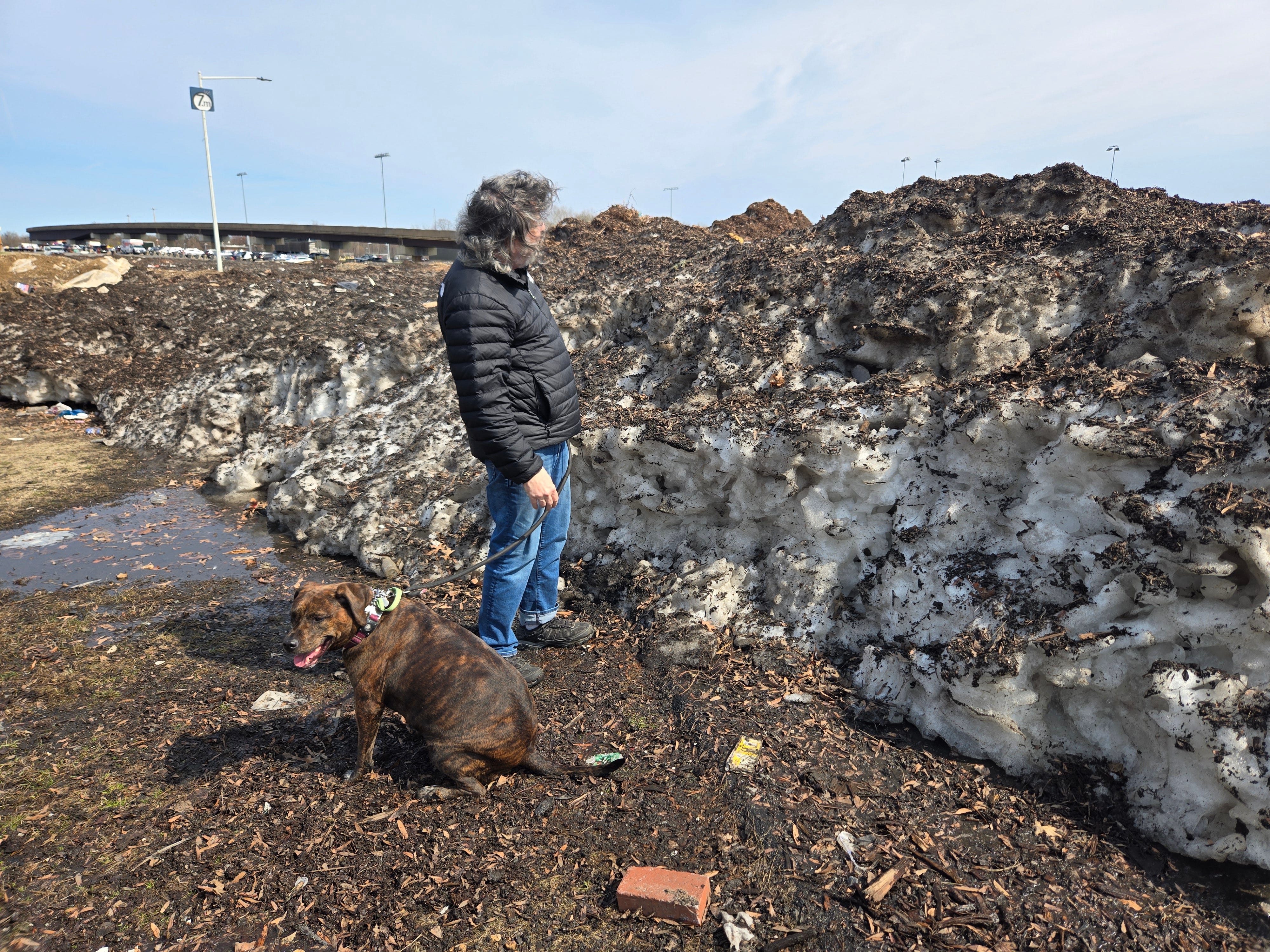
In the photo above, taken yesterday, I and (to a lesser extent) Lexi are pondering the laws of fluid dynamics and the remarkable capacities of primitive technologies.
The huge wall of snow we are contemplating is my height and the serpentine length of two football fields. It has existed in its current form since the big snowfall of January 26th. The snow, of course, is totally gone from the streets but this wall remains, even though it hasn’t been below freezing for weeks, and temperatures have sometimes hit the 70s for days on end. The snow was evidently gathered from the streets in the few days after the snowstorm and transported there, a big unused parking lot, by city snow plows.
But, hey, it’s just about spring! I saw my first robin red breast yesterday morning. Here is a just-spied first daffodil in our front yard.

Still, what of the ice wall, and the mystery hidden therein?
Here is a video of the ice wall one night a few days ago, eerily strobed by the flickering, faltering parking-lot lights of the now deceased RFK stadium. It’s ghostly, and imposing. It almost looks like a Yeti-implicated crime scene.
—
So. All of this got me thinking of my grandpa when he was a young man. He used an icebox, like this one:
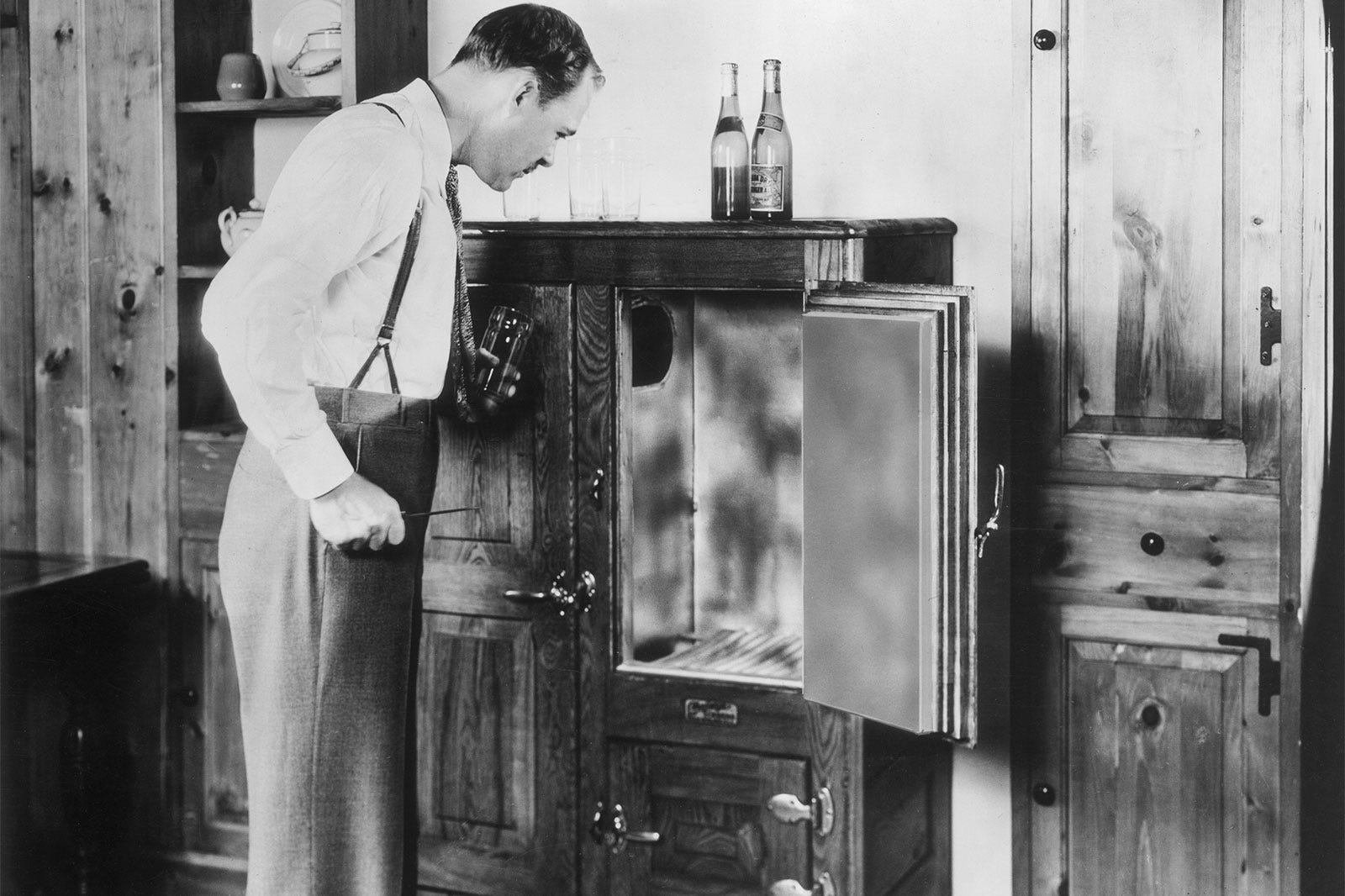
I’d always kind of wondered about iceboxes. How the hell did a single (admittedly enormous) ice cube keep an entire wooden closet of food cold for four days? Why did it not quickly melt away?
And here, in front of me in that parking lot, was the answer. Obviously. What kept the icebox food cold for four days was the very enormousness of the icebox ice cube. As explained today by AI:
“Large blocks of ice take longer to melt because they have a smaller surface-area-to-volume ratio compared to smaller or crushed ice. Because melting occurs at the surface, less exposed surface area per unit of mass means the ice absorbs heat from its surroundings more slowly, requiring more time to melt completely.
“The block of ice was kept at the top of the ice box, so the cold air, which is heavier than warm air, radiated downward. (My Note: AI is being childishly imprecise here. Cold does not “radiate “ anywhere. Warmth radiates up, which has the same result. It gets colder down there with the food. )
Key Reasons for Slow Melting:
Reduced Surface Area (Square-Cube Law): When ice size increases, its mass grows much faster than its surface area. A large block needs 8 times more heat to melt if its size doubles, but the surface area only increases 4 times, slowing the overall melting rate.
Density and Structure: Large, clear ice blocks are often more dense and solid, lacking the air gaps found in crushed or smaller ice, which allows them to absorb heat more slowly.
—
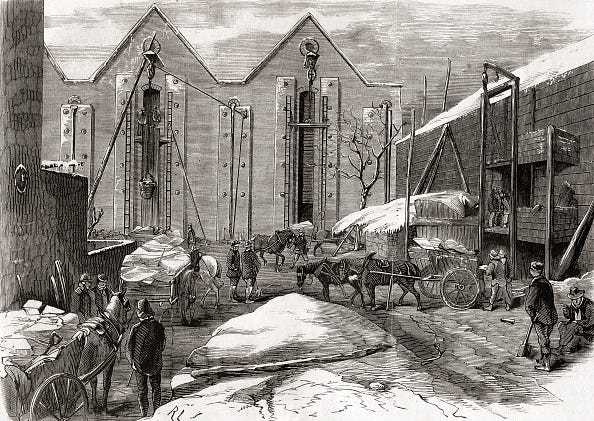
So anyway, the square-cube law also explains the availability of those giant ice cubes to be delivered to homes. Over the summer, even larger blocks of ice, cut from frozen lakes and rivers during the winter and then stored in enormous “ice houses” cheek-to-jowl with other huge blocks of ice, kept these icebergs intact all summer, available for cutting and delivery by business that specialized in such things. The Ice Man cometh, and delivers your giant ice cube to your home roughly every four days.
So.
That is your Weekend Gene Pool challenge for the day: Tell us about a funny/unusual smack-to-the-forehead scientific discovery you have made — at any stage in your life, including childhood. Send them here:
—
In an unrelated matter, Rachel discovered this item in a yard outside a middle school in our neighborhood. Can anyone postulate how an apple became this surgically hollowed-out thing?
—
Okay, good.
Today’s Gene Pool Gene Poll:
Good.
If you didn’t find it interesting, I would suggest that you become a paying subscriber, so, as my boss, you can instruct me what not to do, in the future. If you did find it interesting then please consider voting with your wallet, while we still just cost $4.17 a month.
—
I wanted to bring a block of dry ice on a plane trip and have TSA try to stop me because liquids aren't allowed through. I'd state it's currently a solid then wait for them to foolishly say it was going to melt. Then, I would spring my trap. "No it won't. It will go directly from solid to gas," I'd argue sublimely.
I come pre-illuminated, so no, your discovery did not seem surprising to me. Still, I look forward to other moments of illumination. I am sure there are lots of things out there where I had NO IDEA. It's just that this wasn't one of them.