

Let Us Spray.
I didn't write this. Please read it.
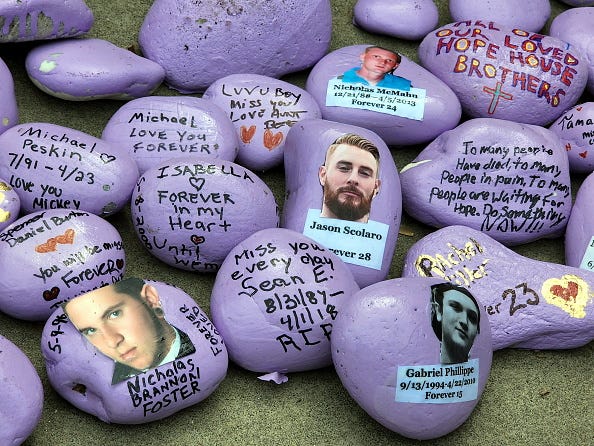
I first met Peter Richmond in the mid-1980s, when I was the editor of Tropic, the Sunday magazine of The Miami Herald. Peter wrote sports for the Herald, but not like any sportswriter I’d read. He wrote with uncommon depth and texture. He trafficked in humor and tragedy, often intertwined, as they are in life. He was the only Herald sportswriter with an open invitation to write for Tropic — a kick-ass publication that valued fearless, muscular, authorial voices — any time he wished.
In time, I left The Herald for The Washington Post. Peter left for a long career as a book author and a staff writer for GQ. We completely lost touch.
A few days ago, in researching a column I wanted to write about a certain aspect of the heartlessness of The Trump regime, I came across this piece, which Peter wrote for The Free Press in May. It’s about life and death, and a nasal spray.
It’s exponentially more powerful and persuasive than anything I could have written on the subject. I am reprinting it below in full on this day before Thanksgiving, the start of the holidays, society’s designated time for compassion.
—
My Son Died of a Fentanyl OD. Congress Can Prevent it from Happening to Others
By Peter Richmond
One day a few months ago, a box mounted to a light pole appeared in the parking lot of an upscale supermarket we frequent, up in a comfortable and orderly corner of southwest Massachusetts. The box looked like one of those little libraries that dispense weathered James Patterson paperbacks, but it turned out to be dispensing free Narcan kits. The device you use to inject naloxone into a dying addict to save his life.
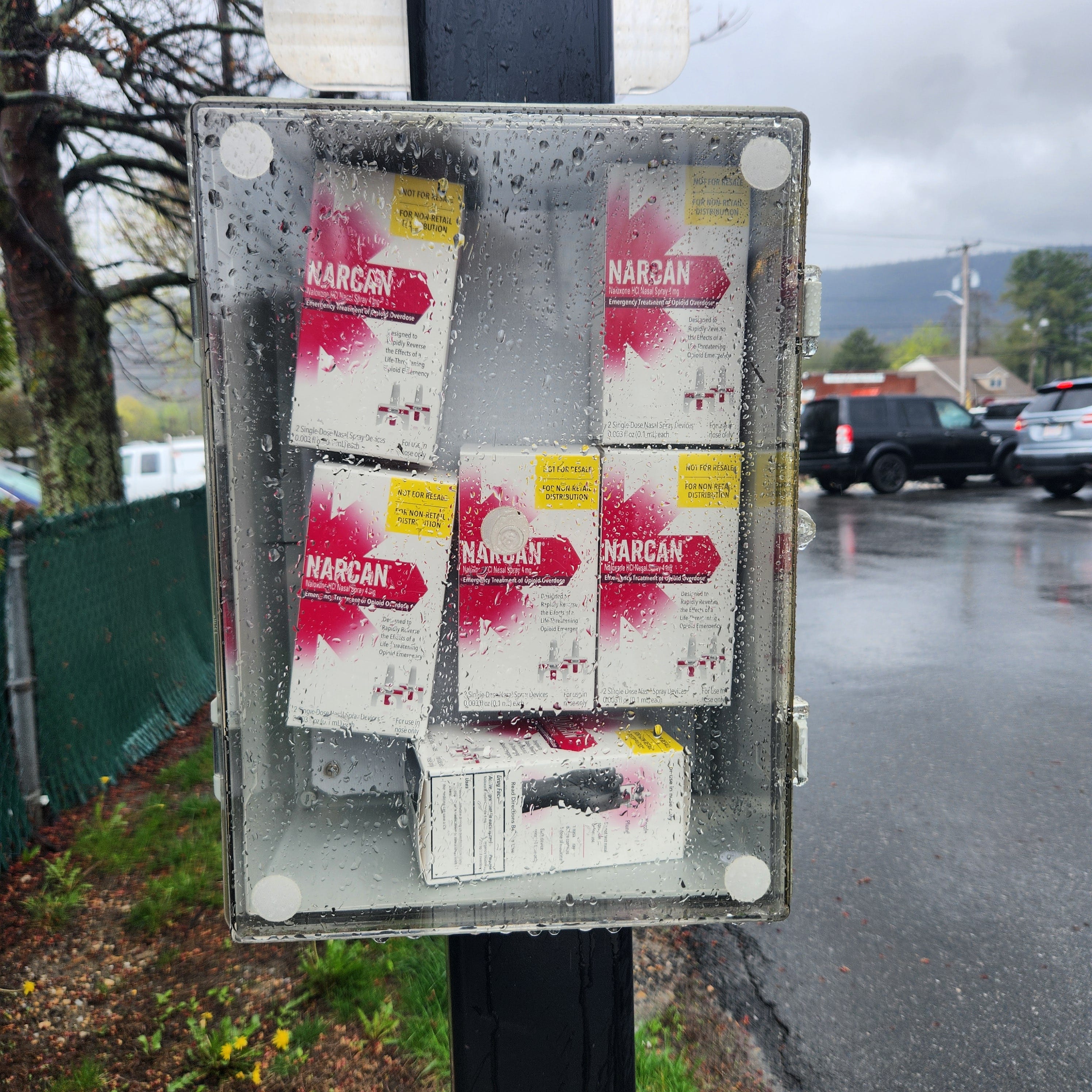
When I first saw it, there were six kits in the box. Not long ago, I noted there were only five. Someone probably figured they needed it on hand because there was a life they might soon have to save. Even outside a $4-per-avocado grocery in the Berkshires, where shoppers load up for the weekend before heading to Tanglewood to catch the Boston Symphony Orchestra performing Tchaikovsky’s Violin Concerto, death by overdose is never far away. Best to be prepared.
President Donald Trump’s budget proposal is in congressional play right now, and one of the many proposed cuts that’s unlikely to raise the slightest objection—indeed, is unlikely to even be noticed by most legislators—will eliminate a $56 million Substance Abuse and Mental Health Services Administration grant that provides for the distribution of naloxone. For those boxes like the one near my supermarket. If it’s approved, it will disappear, along with a whole lot of others. A kid whose life might have been saved could die. Will die. Didn’t have to, but did.
So when those 273 Republican members of the Senate and the House return home after voting to eliminate money to distribute naloxone, maybe one of the reasons that not even a single one fears their wives and husbands and partners asking, “What have you just done back there?” is because they can’t feel the deaths they’ve enabled, not really. Your broker’s cousin’s kid ODs. Your poker buddy’s pharmacist’s brother. One of your constituents’ nephews. But if it’s not happening to you, if the grief isn’t intimate, at the end of the voting day, an OD in the neighborhood is no more real than the death of a woman in Garden City, Kansas, when billions are slashed from Medicaid, or the death from exposure by a man on the streets in Fargo, North Dakota, after federal homelessness funding is cut by $532 million.
Maybe if the legislators could see an OD up close, feel the raw way death really feels, like when they wheel your kid’s corpse down the driveway with the Narcan a few yards away, in a cop’s pocket, unused because his dog kept the cops from getting in, then maybe next time they have the chance, they’ll say, “Unless this document includes funding for Narcan distribution and instruction, I’m voting against it.”
So to that end, here’s a primer. The thing that happens when your only son dies of a fentanyl overdose is that forever after, you’re just trying to play the role of who you were before he died. On a practical level, you still have to maintain normalcy, because even though the old you is dead, he’s not technically “dead,” and so you have to keep being accountable to “society” as a normal, operative citizen (unless you just totally want to give up, which I understand in theory, but it’s not generally practical).
You still have to fill out the five pages on the doctor’s clipboard, or get a license if you want to fish, or get a Shop-Rite member card. You have to play the game on a level that appears authentic to everyone else. You have to play the game on the common playing board. Spending too much time in the other plane—the secret one where you’re searching him out, asking his advice, sharing memories with him, summoning his laughter—is not a productive place to be when every day has to be lived in the old “real” world.
That all said, while the soil of a post-OD life is now poisoned at a fundamental level, it’s still soil, and it turns out that what grows from the new stuff is important and life-sustaining, in a way impossible to put into words: Call it a new understanding, a newfound curiosity about life and its “purpose.” This is partly because all the anxieties about trivial shit have disappeared. You have a clean slate for new thoughts, new insights, new sensations. You’re much closer to the real real world and, if there are any, its real meanings.
Also, you soon stop worrying about people thinking, when they see you, His kid OD’d, what kind of a parent is that?, because even if that’s what they think, so what, right? You also, relievedly, stop thinking movies can take you to deep emotional places, and re-embrace books, the last place where you can still discover emotion. The best part is you have to start living in a way he’d approve of, because he’s no longer here to do the things he’d morally approve of doing if he were alive, because someone has to.
So to the legislators voting on the budget: Narcan’s enhanced distribution system was the major factor in OD deaths declining 24 percent last year. There is no question about that. That means that 27,000 lives were saved because of this drug. Think it over.
Then, as you work on the budget bill, think of this: When you first presumed to legislate for America and its children in a useful and meaningful way, you came to that work—you embraced that work—because you thought you knew what the nation needs and wants. That’s what got you elected. Right now, it needs extraordinary empathy. It needs you to feel my pain. And then take the only action your conscience will allow.
—
This is Peter Richmond’s really good Substack, Peter’s Newsletter.
—
This is Gene. The current version of the federal budget bill for fiscal year 2026 does not include the $56 million for the distribution of Narcan. The bill is still in Congress; final appropriations, on the granular level, have not yet been worked out. The Narcan program is still funded at previous levels through a continuing resolution that expires on January 30. Then, it’s anyone’s guess.
—
Today’s Gene Pool Gene Poll:
Have a safe and happy Thanksgiving. See you on Friday with The Invitational.
My parents lost their only son (my only sibling) to fentanyl poisoning in April 2021. The cocaine was tainted; no one had Narcan. Everything shattered. My parents are just finally starting to come out of the cave.
My brother was the first person to make my eldest child belly laugh, at about 2 months old. Because COVID was still a new danger, he never met my second child, who was 5 month old when my brother died. I breast fed my son at my brother's funeral. I felt a fierce desire to park myself at his open casket and keep everyone and their judgments away.
I have been donating memorial bricks all over the US so my brother's name can travel. My kids are hilarious, as was he, and I wish I could share their poop songs with him. We settle for writing them down in letters we read at his grave.
If Congress couldn't enact reasonable gun control after two of their own -- Gabby Giffords and Steve Scalise -- were shot, you can count on them to ignore any suffering beyond members of their own immediate families.