

Deja Vu
The cruelty continues...
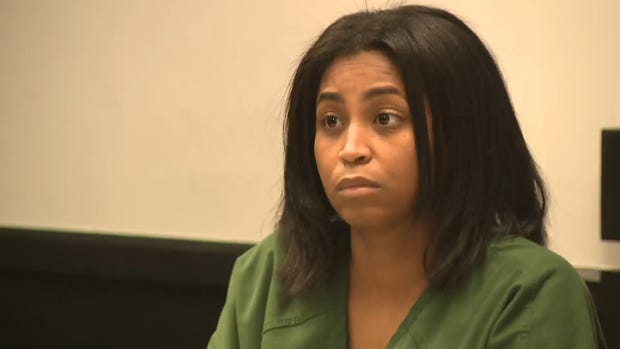
As promised, I am bringing you up to date on the case of Deja Coleman, the Lawrenceville, Georgia, mother who — under extreme sleep deprivation and unimaginable stress — accidentally left her one-year-old son to in a hot car when she went to work at a hospital. Coleman had been living with her three children in a shelter for abused women. Casting aside most prosecutorial precedent in cases like this, the government decided to charge her with second-degree murder, a crime carrying a mandatory minimum ten-year sentence. Then authorities turned her two children over to the abusive father. The court declined to set bond; Coleman remains incarcerated.
When I wrote about this on Saturday, I argued that the prosecutors were acting with small-minded, small-town cruelty.
They still are.
Yesterday, a probable cause hearing was held in Lawrenceville. Coleman’s defense team arrived. They included a group of nurses who worked with Coleman and were there to talk about her professional dedication and love for her children. Dr. David Diamond was there, a neuroscientist who specializes in the effects of stress on memory. He wanted to speak to the neurophysiological basis for what happened to Coleman, and argue that this tragedy regularly befalls good parents. Amber Rollins was there; she is the Executive Director of the national non-profit organization Kids and Car Safety, whose mission is to prevent deaths like this, and whose office counsels people to whom it has happened. None of these people were given an opportunity to speak in court. All the talking was done by Tom Ford, a prominent Atlanta attorney who took this case pro bono.
At the time of the hearing, Amber Rollins had already been told no by the government. She had applied to the Gwinnett County sheriff’s department to be allowed to visit with Coleman in jail. Here is how she put it in her letter:
“The purpose of this meeting would be to provide grief support to Ms. Coleman. Our organization works very closely with families who have lost a child in vehicle related tragedies. . . . The grief parents experience after the loss of a child is profound and can be debilitating. Simply knowing that there is a community out there that is here to support her could be of great benefit to Ms. Coleman.”
This is the letter she got back:
“Since COVID, there has been no in-person visitation in the jail except with attorneys. Inmates can initiate phone calls and other communications to people of their choosing. Due to HIPAA, I cannot disclose any information on any inmate’s physical or mental health condition. I can inform you that we have a full team of physical and mental health professionals who serve our inmate population.”
This was her response:
“That is very unfortunate because I have traveled all the way from Kansas to be here to provide grief support for Ms. Coleman. While I appreciate the supports the jail has in place (those are incredibly important), the perspective of having worked with parents who have lost a child in the same way for 20+ years is quite a different kind of support.
“Your website does not reflect the policies you stated in your email. It appears that Gwinnett County does actually allow in person and video visits. I’d like to have a video visit with her today.”
Still, no face-to-face visit was granted. The negotiations over an eventual video conference are ongoing.
Later, Amber Rollins told me: “I just wanted to give her a hug and give her hope that she can get through this.”
—
In court, Tom Ford made an unusual request. He said he would waive his client’s right to the show-cause hearing — essentially, admit that the arrest was not unwarranted — if, in exchange, the prosecution would temporarily reduce the charge against Coleman from second-degree murder to involuntary manslaughter. After a day or two, they could refile the higher charges anytime they wished.
Why would this matter?
Because it would be an act of mercy, Ford said. It would mean that Coleman could be allowed to attend her son’s funeral on Saturday unescorted by armed deputies, and not in handcuffs.
At the hearing, the prosecutor simply declined without explanation, and the issue, and the hearing, were over. The case was sent to Superior Court. Deja Coleman remains in jail.
Today, Ford will file an emergency motion in Superior Court to have Coleman released on a signature bond — her signature only, no bail money — because she is an indigent. That would circumvent the need for guards and restraints.
Ford is not naive. He does not have inflated hopes that any of these pleas will succeed against the institutional rigidity of a bloodless local justice system that seems intent on vengeance. He is building a case in the court of public opinion.
And so he held a press conference after the hearing, at which he made a point no one had mentioned yet. Near him, Amber Rollins gasped.
Deja Coleman’s oldest son, Dinero, is profoundly autistic. He articulates mostly in unintelligible sounds.
In asking the court to grant Coleman’s release on bond, Ford argued that her continued incarceration was an unconscionable added cruelty to a vulnerable innocent:
“The only person on the planet that her nonverbal six year old son can communicate with is her.”
I’ll stay with this story until the end.
—
Today’s Gene Pool Gene Poll:
From the Mailbag:
Q: Humans did not evolve alongside cars. Humans are human; cars are not. Maybe technology can ameliorate this. But we’d have to force car manufacturers to do it by law.
My grandmother, who was born in 1889, forgot her baby (my father) at the grocery store. She picked up her grocery bags and left the baby on the counter. She was halfway home before she remembered. That forgotten baby was born in 1921.
When he grew up and became my father, we lived for 2 years in Iran. Once he forgot me, a 12-year-old, in downtown Tehran. We were going grocery shopping, and I asked if I could wait for him in this English-language bookstore. He agreed. It was a long wait. He went shopping, then drove all the way home to northern Teheran, and when he got home, my mother said, “Where’s Bella?” He gasped. Of course he went back and got me.
When I grew up and had my second baby, I went to the beach with both my children and some friends. When we were walking back from the beach, with me holding my older child’s hand, I suddenly realized I didn’t see my baby. I panicked and yelled, “Where’s Adam?! We left him behind!” Everyone else smiled and kept quiet, because it took me quite a while to realize he was on my back in a baby backpack I was wearing. He had fallen asleep.
Forgetting a child could happen to anyone. For some of us it’s a family tradition. Thank God we were lucky.-- Bella Siverstein
—
A: Thanks, Bella. That’s beautiful.
—
Please consider this if you have the means:
It might have happened to me, but I would have been treated entirely differently because I am white. My despair over this and other injustices is bottomless. Thank you for your work.
This is sickening that they can't even show her an ounce of human decency, by letting her meet with the grief counselor (even over video) or attend, without handcuffs, her son's funeral (and support her other son). I also question whether law enforcement/the courts would be acting the same way if Deja were *any* of the following: white, a male, wealthy (or even middle class, whatever that is anymore).