

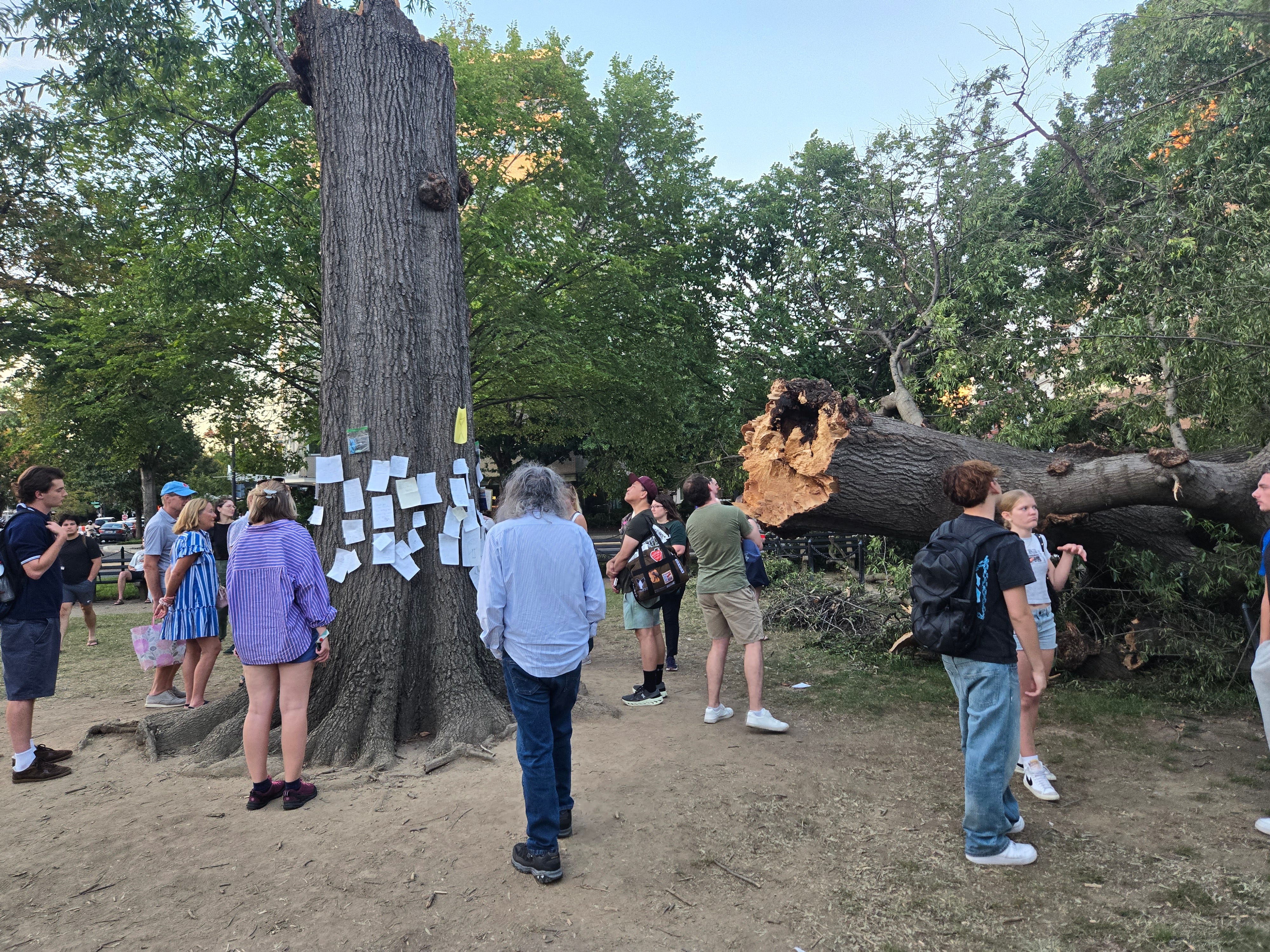
Rachel and I were walking in Dupont Circle in the early evening Monday. In the distance, some sort of rolling, impromptu ceremony was unfolding.
It was the start of a pleasant night, cool for a change, and the mood on the street was festive. But what was happening just ahead was somber. Reverent. Awed. People were smiling, but sadly. It felt like a grandparent’s funeral.
Four days earlier, a ferocious overnight windstorm had blindsided Washington, D.C., felling hundreds of trees, crushing cars and snapping power lines.
This massive, ancient willow oak in Dupont Circle, probably planted during the second Grover Cleveland administration, had broken clean and high — almost horizontally across the five-foot-wide trunk at a point about fifteen feet off the ground. The acoustics must have been terrifying — less like a crack than a detonation. The lush canopy was sprawled to the side. It had plummeted directly into a small bare area, wreaking no damage, as though it had controlled its fall out of respect for its place and its people.
I took in the scene, and remembered something, and delivered this tiny, impromptu, inadequate eulogy for Rachel’s camera.
Later, I got to think about it more.
On Monday, May 3, 1971, I’d been there at that same spot. I was 19, and had come down to D.C. as the editor of the NYU daily newspaper. I was there to cover Mayday, a huge protest against the Vietnam War. The naively defiant slogan for the protest was, “If the government won’t stop the war, we’ll stop the government.”
It was the last day of a three-day event that drew some 50,000 people — mostly college-aged — from around the country. A ragtag encampment of the scruffy counterculture was set up in West Potomac Park. Day One had been joyful. The Beach Boys performed.
Day Two was fitful — the camping permits for the park were revoked and people were asked to disperse and go home. Most did. Some — the angriest — did not.
Day Three was filled with fury. That was May 3, when I met the tree.
Richard Nixon was ready. He had mobilized 1,500 National Guardsmen and 12,000 federal troops, and they were out in overwhelming numbers in riot gear, with riot stuff — face shields and tear gas canisters in shoulder-fired grenade launchers, and cans of pepper spray, for anticipated hand-to-hand. The protesters mostly just had bandannas and water bottles to douse them for eye and nose protection, and hand-lettered placards, and their voices.
Those voices were boisterous and self-glorifying, mouthing absurdly heroic chants more suited for guerrillas in Third World dictatorships. I heard this one all over the city — it was borrowed from Irish poet Oliver Goldsmith: “Fight, fight and run away / Live to fight another day.” These were days when young radicals were mythologizing themselves. They were there to change the world, you know?
As protests go, it was fiery, but almost … polite, compared, say, to the riots at the Democratic Convention in Chicago three years earlier. The Washington Post would later call what happened in their city that day “the final consequential leftist impact by the antiwar movement.” By late1971, exhaustion had mostly set in. The war was winding down, but a year and a half later, Nixon would win reelection, trouncing the darling of the peacenik lefties, George McGovern.
I remember how I got to Dupont Circle. I was a quarter mile away, covering some sort of futile street havoc — a burning trashcan, I think, and the slashing of the tires of a parked police car — when someone bellowed, “Dupont Circle! Now!” I had no idea what or where Dupont Circle was, but I joined a sprinting surge of longhairs, and in just a couple of minutes we were there.
I didn’t have particularly long hair then. I was young. I could sprint. Look at me now. Look at the tree, now.
I was there at some remove — not a protester but an observer, standing back and trying for whatever degree of objective dialectics I could muster, at 19. I felt I was there to chronicle what was happening, but also to philosophize as best I could. It was self-delusional, in a way. My sympathies were entirely with the protesters. Adult journalists still sometimes self-delude in this way, of course.
In front of me, Dupont Circle was at war. But it was a silly, futile war, like a couple of big kids blindly top-slapping at each other in the schoolyard, faces turned away to avoid contact. The protesters would surge menacingly toward the cops, throw a few things and retreat. You heard the dull percussion of the grenade launchers, saw the smoke rising from the grass and macadam, then smelled it, as the police advanced on them. My eyes stung only a little — I was a bit distant from the center of it, out near the protection of the tree. But there was something nauseating in the air that made me salivate queasily, like when you need to puke, when you know you are going to puke, but it hasn’t happened yet and you almost wish it would.
Out there, in front of me, I watched as the police would surround a group of protesters and herd or drag or frog-march them, a dozen at a time, into paddywagon buses. Then they would turn and move to encircle and incarcerate another group. There seemed to be no end of paddywagon buses at the ready. One pulled out, another took its place.
Here’s the philosophy I could muster at the time: Despite the furor, you had a sense of the permanence of Washington, of authority, of a benign totalitarian infrastructure. This place had been here forever, and was self-protective. You looked at the old stone buildings, and the old, massive trees, and you knew it. They’d be there forever.
Over the next few days after May 3, one thing became clear: The cops had screwed up. They’d arrested more than 12,000 people so haphazardly that, in court, almost no police witnesses were able to identify any of their arrestees, or say for sure what that particular person had been doing to justify arrest. I saw this firsthand. I returned to Washington a week later because one of my reporters had been rounded up and arrested — I was there to testify that he was, ahem, on assignment. It wasn’t necessary. The judge threw the case out in 30 seconds.
Of the 12,000 kids arrested, only 75 or so were convicted of anything.
It was all so stupid.
—
On the trunk of the fallen tree in Dupont Circle this week, people had tacked up messages. They were not stupid. They were simple and they were beautiful.
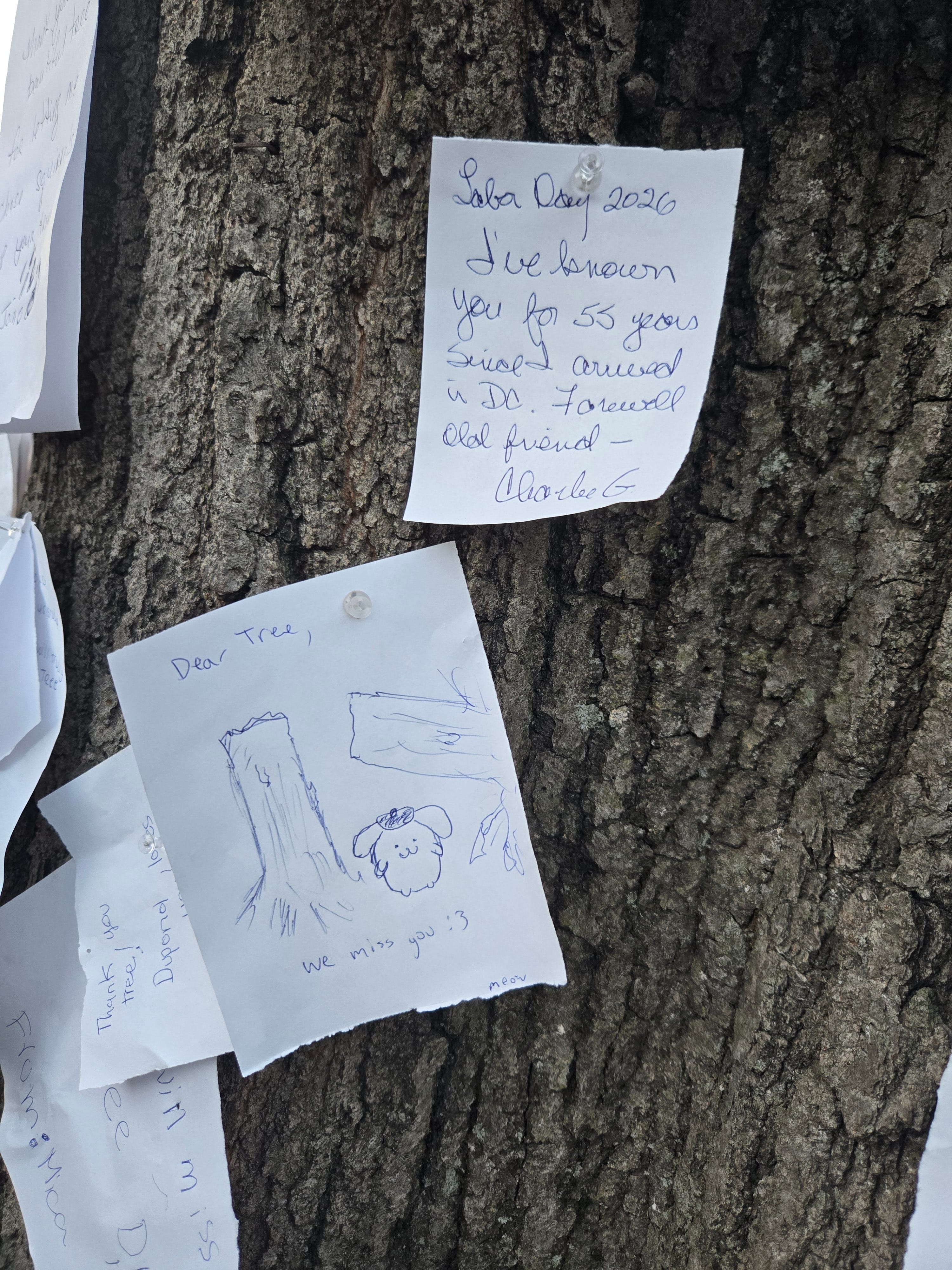
And:
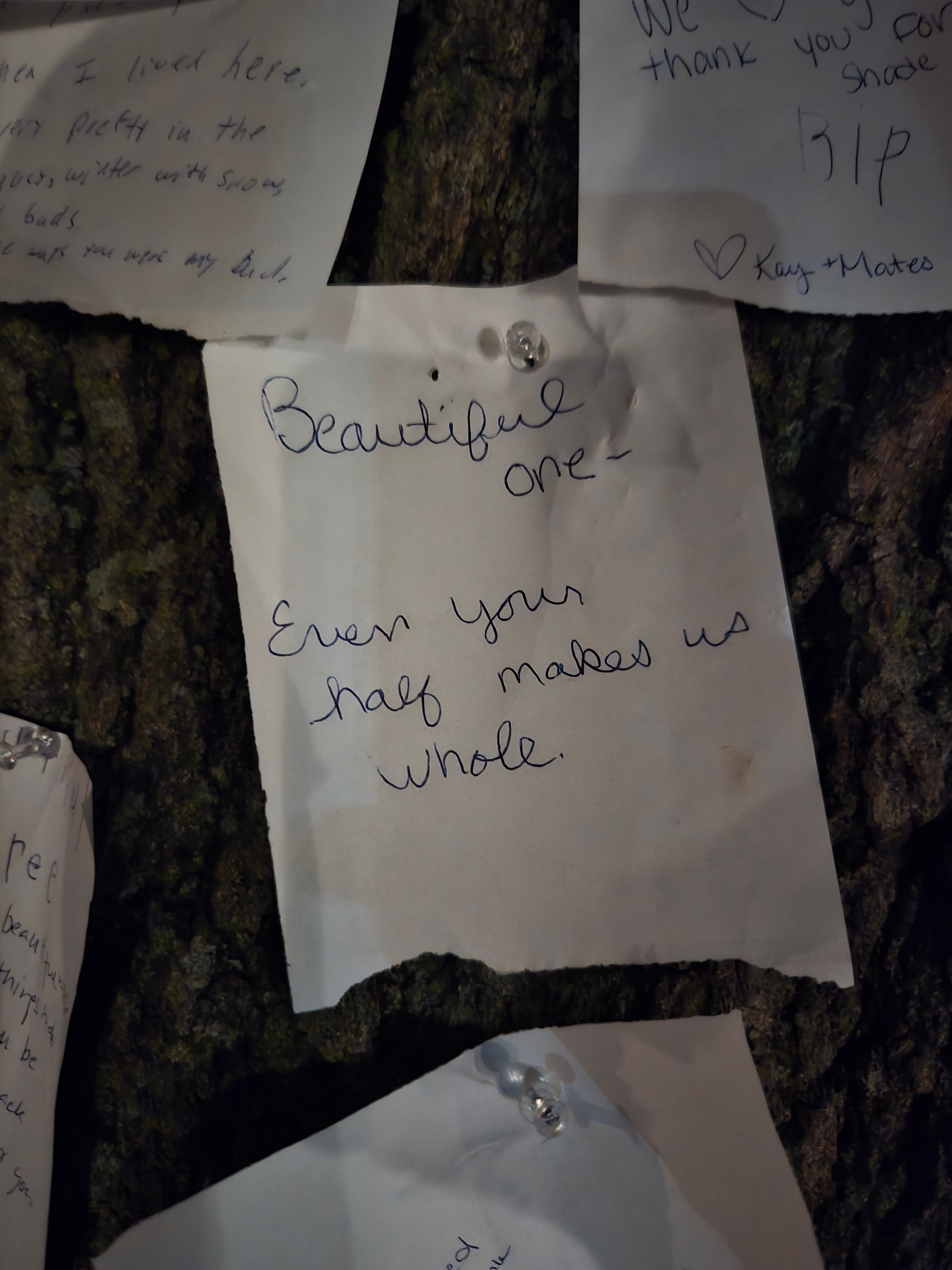
And:
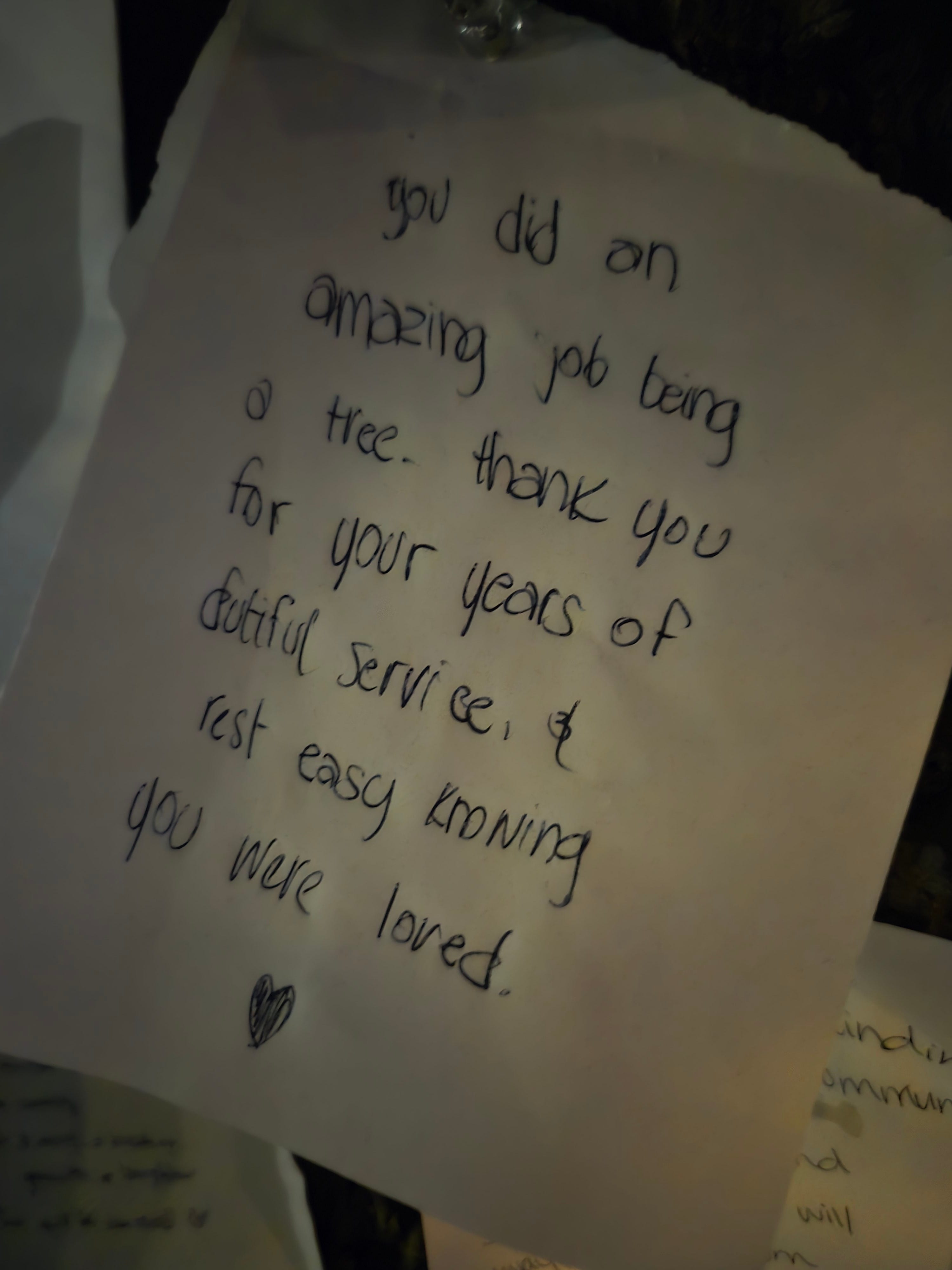
And:
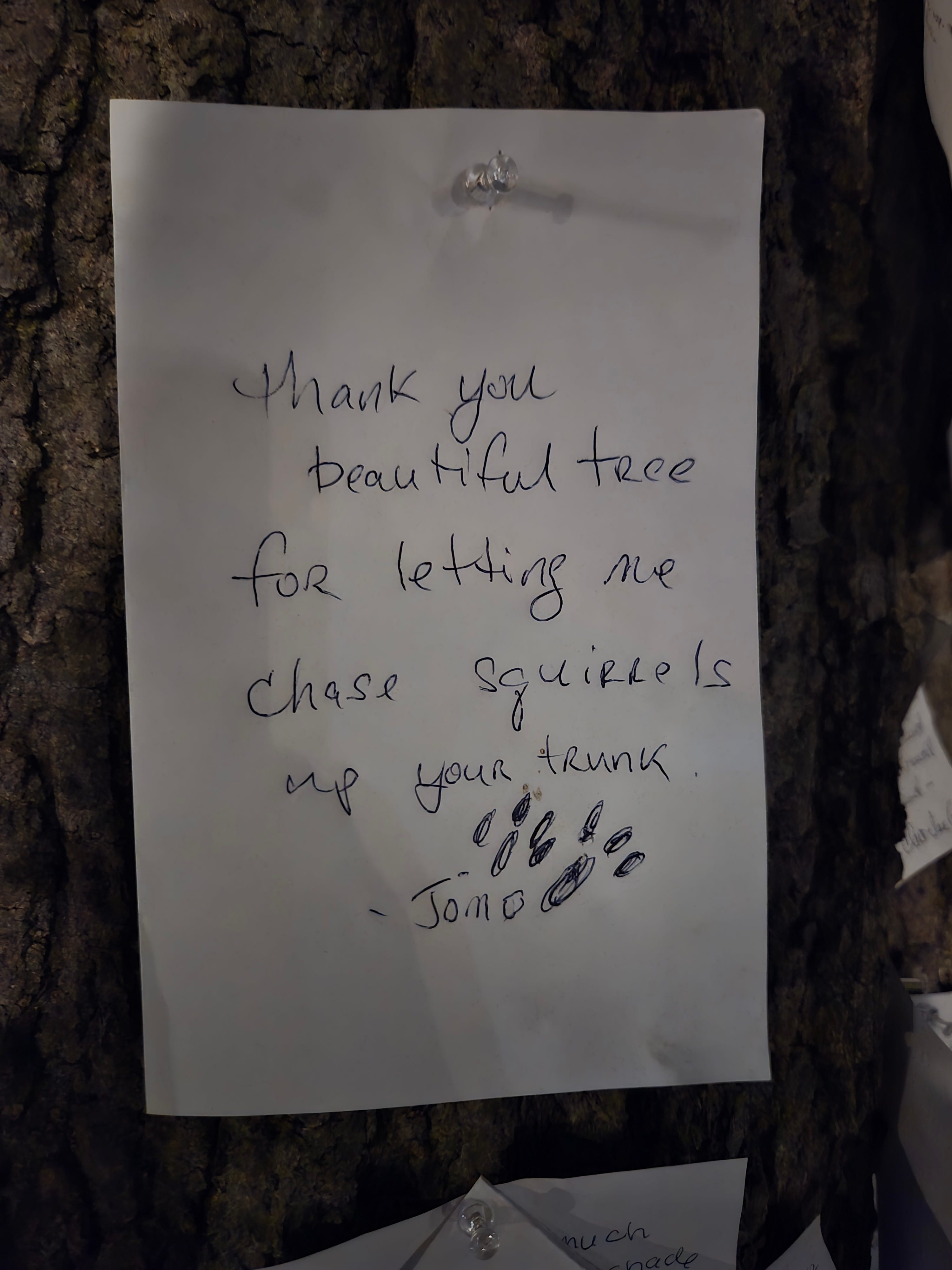
And:
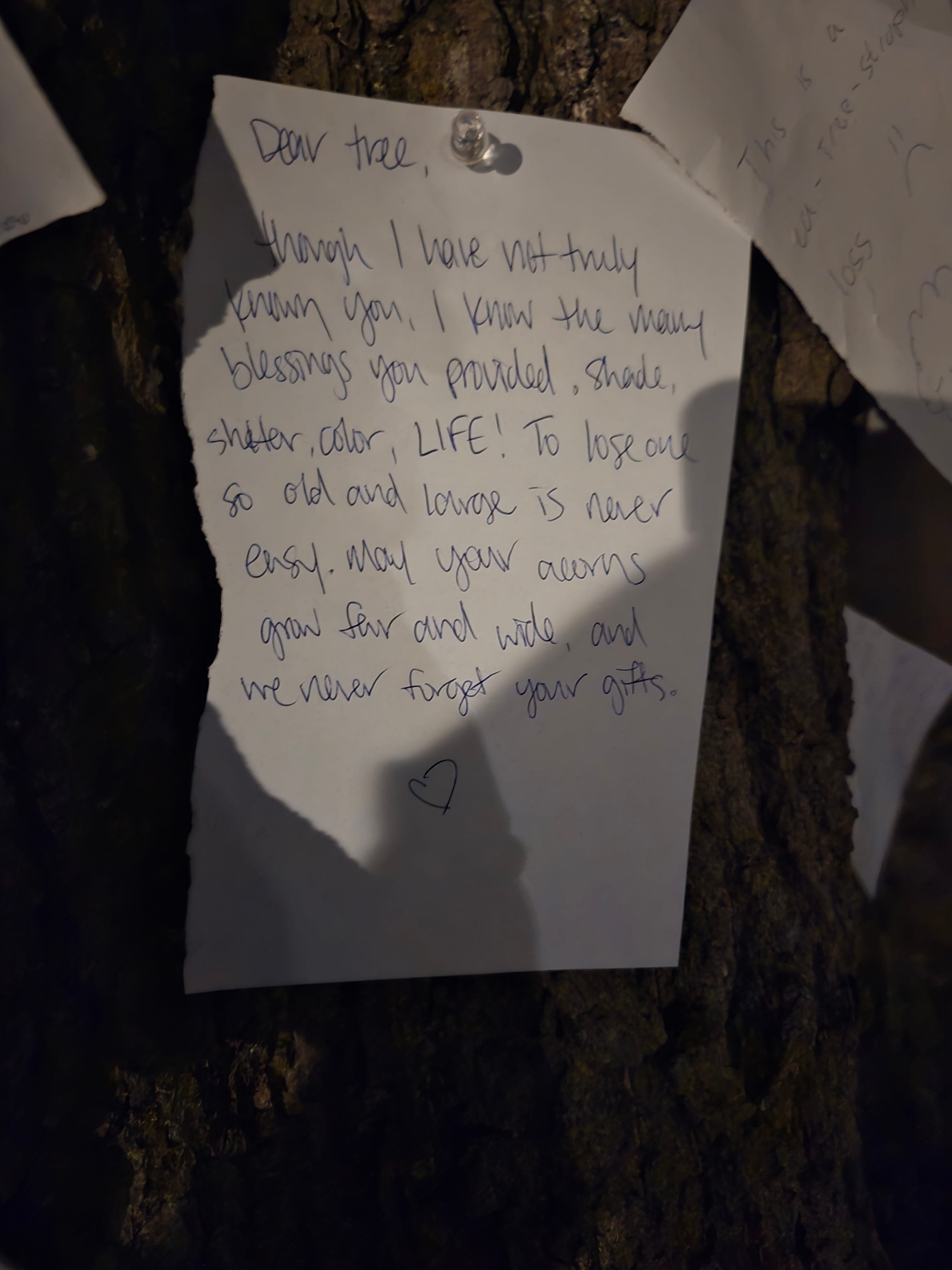
And:
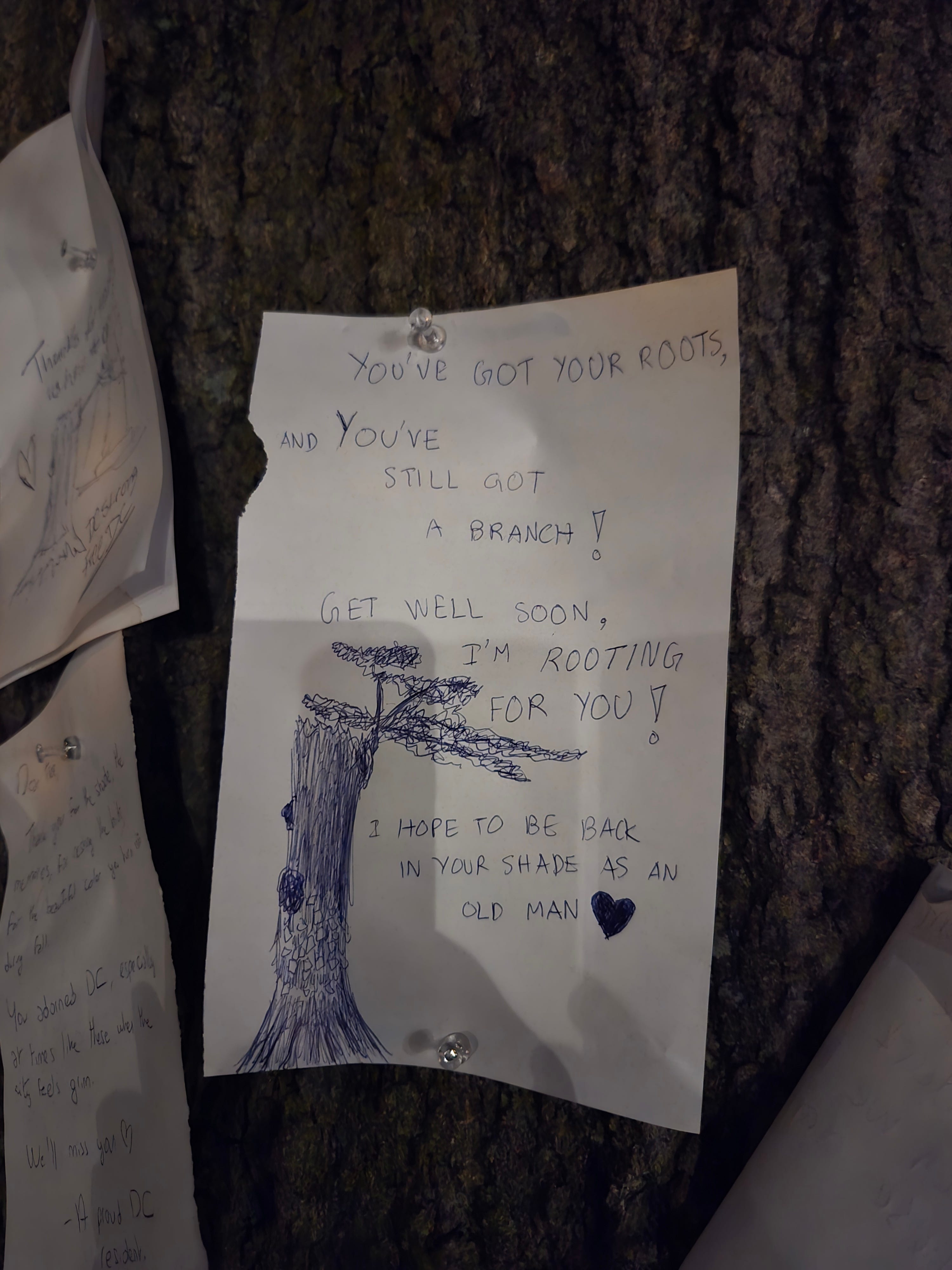
Simple, not stupid.
I like simple, now.
—
Today’s Gene Pool Gene Poll:
—
Hey, believe it or not, this is how I make my living these days. If you can help, please do. The Gene Pool survives on your generosity.
On today of all days, this post is making me tear up. I love the notes people left on the tree. Thank you for sharing this with us Gene.
The rest of America can cast their aspersions on the citizens of Washington, but I love that we stop and care about trees (this one in Dupont, Stumpy, the ones at the golf course).